Hot tub insulation guide: Full foam vs thermal shield
April 14, 2026



They say it’s what’s on the inside that counts. When you’re researching hot tubs, that turns out to be more true than expected.
Jets, seating, size, and overall design usually get the most attention early in the process. Those are the features you can picture yourself enjoying. But as you begin comparing models more seriously, insulation becomes part of the conversation — especially if you plan to use your hot tub throughout the year.
Insulation plays a role in operating cost, performance, and long-term reliability. It affects how well the water maintains temperature, how often the heater needs to run, and how consistently the spa performs through changing seasons.
Many manufacturers describe their insulation using different terms — full foam, thermal shield, hybrid insulation, perimeter insulation. The language can make it difficult to tell whether there is a real difference or simply a different way of describing the same idea.
Understanding how insulation works can help you look past terminology and focus on what actually matters in everyday ownership.
Why insulation matters more over time
A hot tub sits outside in the elements every day, whether that means a warm summer afternoon or a freezing winter night.
Even when you are not using the spa, the system is maintaining water temperature and running filtration cycles at programmed intervals. The heater turns on as needed to keep the water ready, while circulation keeps water moving through the system.
Because of this, insulation does more than simply help keep water warm. It helps create a stable environment inside the spa so the entire system can operate consistently.
Over time, effective insulation supports steady temperature, predictable energy use, and reliable performance when temperatures drop. It also helps support the plumbing structure inside the cabinet, reducing movement that can occur from vibration or pressure changes.
These details may not be obvious on day one, but they often become more meaningful with years of ownership.
Comparing the two common types of hot tub insulation
When people hear the word insulation, they often think about fiberglass inside the walls of a home. A hot tub is more complex because pumps, plumbing lines, and equipment are contained inside the cabinet.
Most manufacturers rely on one of two general approaches.
Some use full foam insulation, which fills the space between the shell and cabinet with insulating material. Others use perimeter or thermal barrier insulation, which lines the cabinet walls while leaving more open space inside the spa.
Understanding how each method performs can make it easier to evaluate long-term value rather than focusing only on initial purchase price.
Full foam insulation
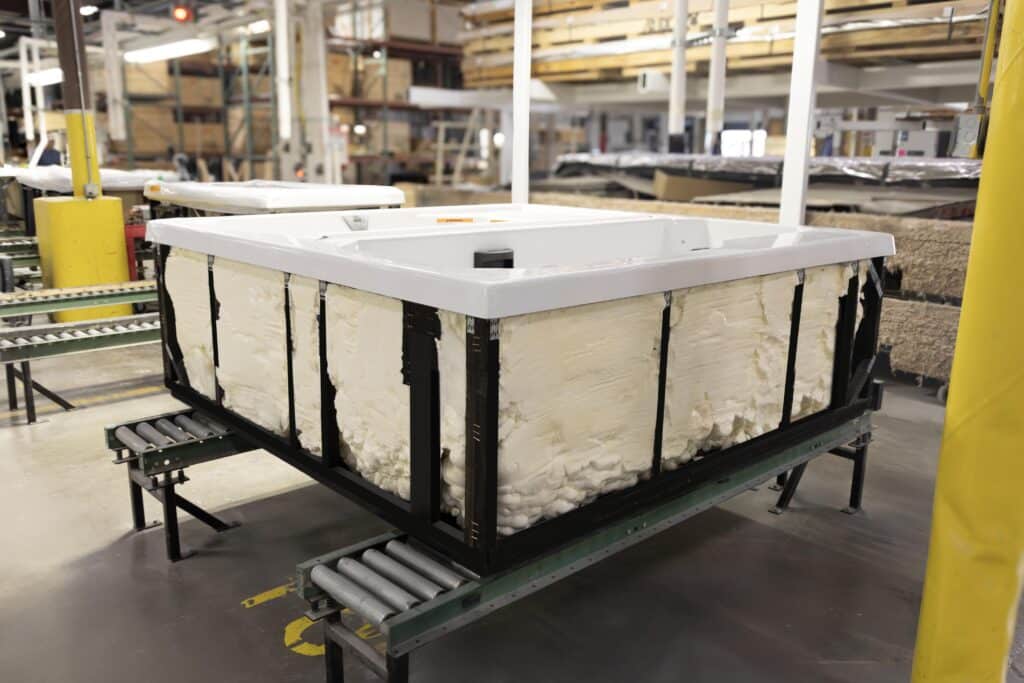
Full foam insulation fills the interior space between the shell and cabinet with insulating foam, creating continuous coverage throughout the structure.
Because the foam surrounds plumbing lines and internal components, it helps reduce heat loss while also stabilizing the plumbing system itself. This added support helps minimize vibration and limits movement in pipes and fittings as the spa operates over time.
MasterSpas uses environmentally friendly open-cell full foam insulation with an R-value of 24, providing strong thermal resistance throughout the spa cabinet. R-value measures how effectively insulation resists heat transfer. The higher the R-value, the more effectively heat is retained.
By filling every crevice inside the cabinet, the insulation helps tightly seal areas where heat might otherwise escape. This continuous thermal barrier supports consistent water temperature even as outdoor conditions change throughout the year.
The foam is designed to resist mold and mildew and produces no ozone off-gassing, supporting a clean internal environment while maintaining structural integrity over time.
Full foam insulation has been used across the industry for decades because it delivers consistent thermal performance across a wide range of climates. Rather than relying on pockets of trapped air or equipment-generated heat, the insulation itself provides dependable thermal resistance.
Because the foam also helps dampen vibration from pumps and moving water, it contributes to quieter operation and a more refined ownership experience.
Thermal shield or perimeter insulation
Perimeter insulation systems take a different approach. Instead of filling the interior with foam, insulation is placed along the cabinet walls.
Some manufacturers describe reflective materials designed to capture heat produced by pumps and redirect it back toward the water.
Because more open space remains inside the cabinet, plumbing components may be easier to access if service is needed.
However, systems that rely partly on retaining equipment heat may perform differently depending on how often pumps run, how filtration cycles are programmed, and how the spa is used day to day.
In colder weather, maintaining consistent temperature may depend more heavily on how effectively heat is retained inside the cabinet.
Understanding R-value in hot tub insulation
As you research insulation, you may come across the term R-value. R-value is a standard way to measure how well a material resists heat transfer. The higher the R-value, the more effectively insulation helps keep heat where it belongs.
In a hot tub, that means helping maintain water temperature with less demand on the heater.
Hot tubs operate in a more demanding environment than most insulated structures because they are exposed to outdoor temperatures, wind, and seasonal weather changes. Effective insulation helps maintain temperature whether the air outside is warm, cool, or below freezing.
MasterSpas open-cell full foam insulation provides an R-value of 24, delivering strong thermal resistance throughout the cabinet. Because the foam fills the space completely, it helps limit air movement inside the spa structure and maintain consistent performance over time.
Some insulation systems that rely primarily on reflective barriers may not provide a single comparable R-value because performance can vary depending on operating conditions and how often equipment is running.
Why insulation design can influence long-term experience
Many buyers wonder whether insulation type will make a noticeable difference in everyday use.
In milder weather, the difference may not always feel dramatic. But as temperatures drop, consistent insulation coverage helps reduce heat transfer between the warm water inside the spa and the cooler air outside the cabinet.
Full foam insulation helps limit internal air movement, which can reduce heat loss and support more stable water temperature.
Because the insulation also supports plumbing lines throughout the structure, it helps keep components secure over years of use.
Perimeter insulation systems may emphasize accessibility but rely more on capturing heat created during operation.

MasterSpas insulation and energy efficiency
MasterSpas designs hot tubs as complete systems, with insulation working together with other components to support efficient operation.
Open-cell full foam insulation with an R-value of 24 helps create a stable internal structure while tightly sealing areas where heat loss can occur. The environmentally friendly foam resists mold and mildew, produces no ozone off-gassing, and helps reduce vibration and noise from internal components.
This approach supports consistent performance across seasons while meeting stringent hot tub energy efficiency standards.
Together with insulated covers, circulation systems designed for steady operation, and cabinet construction intended to protect internal components, the result is a spa designed to perform reliably over time.
Many buyers are not simply looking for the lowest possible operating cost on paper. They are looking for confidence that their hot tub will perform consistently without constant adjustment or concern.
Questions to ask when comparing hot tub insulation
As you evaluate options, it can help to consider how the hot tub will perform in everyday use.
- Will the spa maintain temperature consistently when outdoor temperatures drop?
- Does the insulation create a continuous thermal barrier?
- Are plumbing lines supported throughout the structure?
- Does the manufacturer take a system-wide approach to energy efficiency?
- Is the insulation designed to perform reliably for years of ownership?
Making a confident decision
Choosing a hot tub is rarely an impulse purchase. Most buyers spend time researching, comparing options, and thinking about how the investment will fit into their lives.
Insulation may not be visible, but it plays an important role in everyday ownership.
Full foam insulation continues to be widely trusted because it provides continuous coverage, structural support, and consistent thermal performance.
Understanding how insulation works can make it easier to evaluate options and feel confident in a decision that supports comfort, reliability, and long-term value.
Hot tub insulation FAQ
What is full foam insulation in a hot tub?
Full foam insulation fills the space between the hot tub shell and cabinet with insulating foam, creating continuous thermal coverage. MasterSpas uses open-cell foam with an R-value of 24, helping reduce heat loss while supporting plumbing structure, reducing vibration, and contributing to quieter operation.
What is thermal shield or perimeter insulation?
Thermal shield or perimeter insulation places insulating material along the cabinet walls instead of fully surrounding the shell with foam. Some systems use reflective materials designed to capture heat generated by pumps and redirect it toward the water. These designs typically leave more open space inside the cabinet.
Which hot tub insulation is most energy efficient?
Energy efficiency depends on insulation coverage, circulation system design, spa cover quality, and climate conditions. Full foam insulation is widely used because it creates a continuous thermal barrier that helps maintain stable water temperature and predictable energy use.
Does hot tub insulation affect operating cost?
Insulation helps reduce heat loss, which can reduce how often the heater needs to run to maintain temperature. Consistent insulation coverage can contribute to more predictable operating costs, particularly in colder climates.
Why do some manufacturers promote thermal barrier insulation?
Some manufacturers promote thermal barrier insulation because it allows easier access to components and may reduce material cost. Buyers often compare insulation approaches based on long-term efficiency, structural support, and consistent performance.
Does insulation matter in colder climates?
Insulation plays an important role in colder climates because the difference between water temperature and outside air is greater. Continuous insulation coverage helps reduce heat transfer and maintain stable performance throughout the year.
How does MasterSpas design hot tubs for energy efficiency?
MasterSpas hot tubs use open-cell full foam insulation with an R-value of 24 that fills the cabinet completely to tightly seal areas where heat loss can occur. The environmentally friendly foam resists mold and mildew, produces no ozone off-gassing, and helps reduce vibration and noise. Combined with efficient circulation systems and insulated covers, this approach supports consistent performance across seasons.