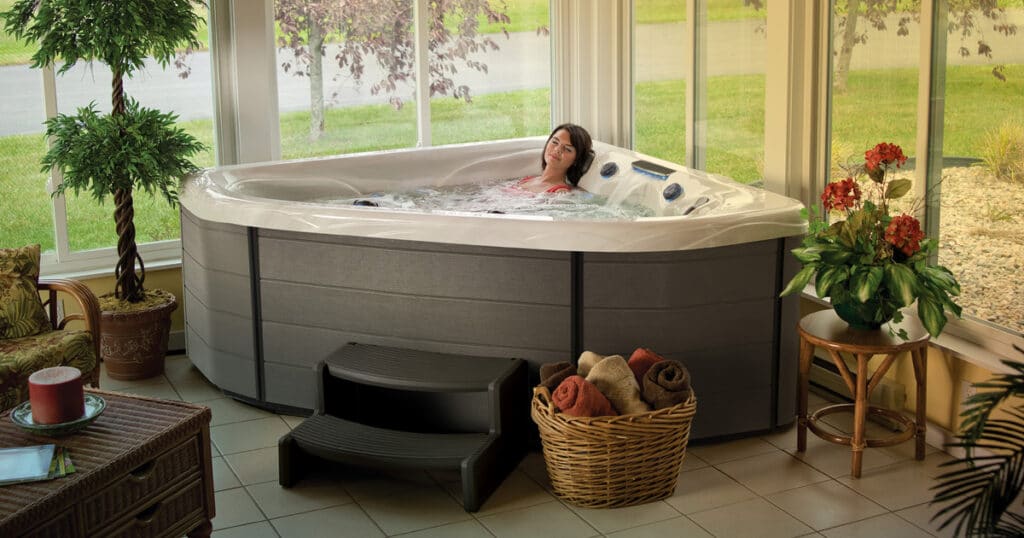
Plan your indoor hot tub installation
March 2, 2026



Can you put a hot tub indoors? What to know before installing an indoor hot tub
For some homeowners, the ideal spa experience doesn’t involve stepping outside into the cold or checking the weather first. An indoor hot tub offers privacy, convenience, and the ability to relax year-round in a space designed just for unwinding.
But while installing a hot tub indoors is absolutely possible, it requires more planning than simply choosing a model and scheduling delivery. Ventilation, flooring, electrical access, and structural support all play a role in creating a space that feels comfortable — not complicated.
If you’re considering an indoor hot tub, here’s what to know before you start planning.
Are indoor hot tubs a good idea?
An indoor hot tub can be a great fit for the right home. Some homeowners prefer the added privacy, especially in neighborhoods where backyard space feels exposed. Others like the convenience of stepping into a spa just a few feet from their bedroom or living space.
Indoor installations do require a bit more forethought than outdoor ones, particularly when it comes to managing moisture and ensuring the room can support the spa. When those elements are addressed early, though, an indoor hot tub can feel like a natural extension of the home — more like a personal retreat than an add-on.
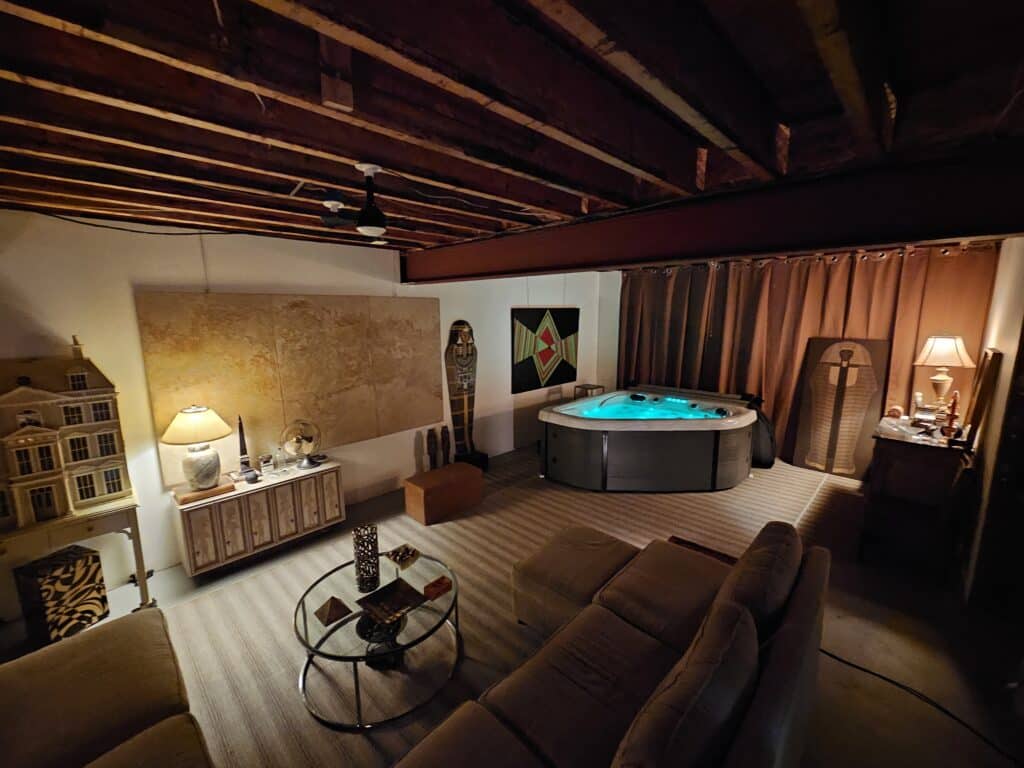
Planning an indoor hot tub installation
Start with the size of the spa
One of the first considerations is simply whether the spa fits the space. While larger hot tubs are great for entertaining outdoors, indoor installations often work best with smaller or lower-profile models that can move through doorways and hallways more easily.
Thinking about the room first — rather than just seating capacity — usually helps narrow the options quickly.
Plan how water will move in and out
Like any spa, an indoor hot tub needs to be filled and drained periodically. Most homeowners still rely on a hose for filling, so it helps to know where the closest water source is and how far it needs to travel.
Drainage matters just as much. Some homeowners incorporate a floor drain during construction or renovation, while others plan to use a hose or sump pump when it’s time to empty the spa. Either approach can work, but having a plan before installation makes the process much smoother.
Consider flooring and moisture protection
Unlike an outdoor spa pad, an indoor hot tub sits inside a finished space. Splashes, humidity, and condensation can affect the surrounding materials over time.
Think about how home design trends have changed over the years. At one point, carpet in a bathroom seemed like a good idea — until people realized how much moisture the space actually sees. A hot tub room requires the same kind of thoughtful planning.
Water-resistant flooring, sealed surfaces, and smart room design can help protect your home. Many homeowners planning an indoor spa talk with a contractor early to make sure the space is prepared for the additional moisture.
Electrical and structural planning
Power access is another important piece of the puzzle. Most hot tubs require a 240-volt, 50-amp GFCI connection, which should be installed by a licensed electrician. This dedicated electrical line ensures the spa has the power it needs to run the heater, pumps, and control system safely.
Some smaller plug-and-play hot tubs can connect to a standard outlet instead. However, even with these models, it’s important to make sure the outlet is properly protected.
Because water and electricity share the same space, safety features like GFCI protection are essential for any hot tub installation.
Weight is another factor that sometimes surprises homeowners. A filled hot tub can weigh several thousand pounds, so verifying that the floor can support it provides peace of mind. This is especially important for installations above ground level.
Ventilation makes all the difference
If there’s one factor that determines whether an indoor installation feels comfortable long-term, it’s ventilation.
Warm water naturally creates humidity. Without airflow, that moisture can affect paint, drywall, trim, and even structural elements. A well-designed indoor spa space often includes mechanical ventilation, operable windows, or a dehumidification plan to keep the air dry and comfortable.
When ventilation is handled properly, the space feels inviting rather than damp.
Think about the delivery path
Before ordering a spa, it’s worth mapping the route it will take into the home. Doorways, corners, and stairwells all influence what size and shape spa will work.
For example, a five-person hot tub like the Twilight Spas 6.2 measures about 78 inches by 78 inches by 34 inches tall. That doesn’t mean you need a seven-foot doorway to bring it inside. In many cases, the spa can be carefully positioned on its side for delivery, meaning a doorway clearance of around three feet might be enough.
A dealer can help review the spa dimensions and the delivery route to confirm whether the installation is feasible. Taking measurements early helps avoid surprises on delivery day.
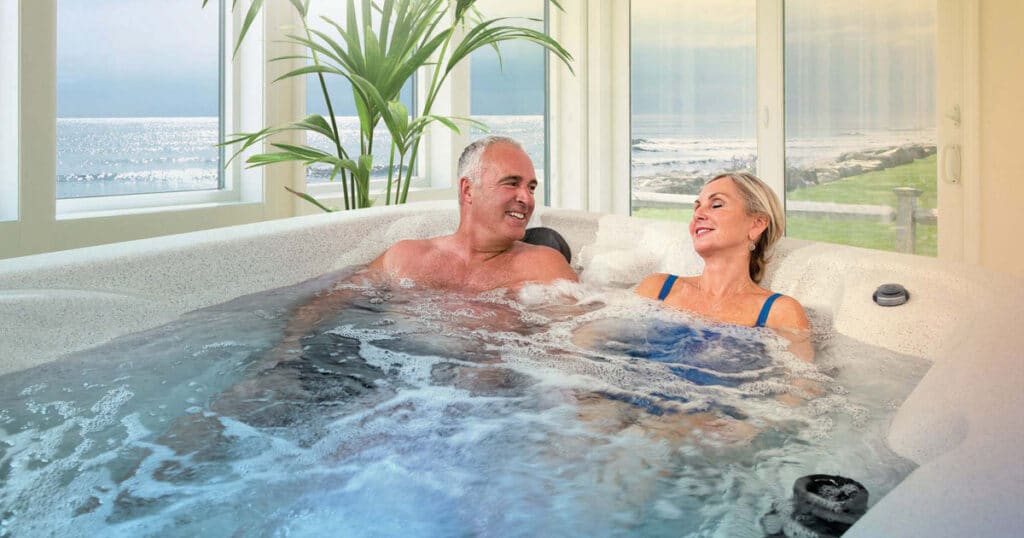
Indoor vs outdoor hot tubs: which is right for your home?
Deciding whether to place a hot tub indoors or outdoors isn’t just about space — it’s about how you want to use your spa and what role it will play in your home.
An indoor hot tub often appeals to homeowners who want consistency and privacy. Because the spa is protected from the weather, it’s easy to use year-round without worrying about rain, snow, or wind. The controlled environment can make daily use feel more convenient, especially if the spa is located near a bedroom or bathroom. For some, an indoor spa becomes part of a regular wellness routine rather than an occasional backyard feature.
Outdoor hot tubs tend to offer a different experience. Many homeowners enjoy soaking under the stars, taking in landscaping, or gathering with friends around the spa. Outdoor installations are often simpler from a construction standpoint, since ventilation isn’t a concern and drainage and electrical access can be easier to manage.
Maintenance considerations can differ as well. Indoor spas are protected from leaves and weather debris, which can help keep the water cleaner. However, they require careful moisture control in the surrounding room. Outdoor spas may need more routine cleaning, yet they typically don’t affect the structure of the home in the same way.
Ultimately, neither option is universally better. An indoor hot tub can feel like a private retreat built into your home, while an outdoor spa can become the centerpiece of your backyard. The right choice comes down to your priorities — convenience and privacy, or simplicity and atmosphere.
Planning your next step
Hot tubs from MasterSpas are designed for year-round use, whether installed indoors or outdoors. If you’re considering an indoor spa, working with a local dealer can help you evaluate your space, confirm installation requirements, and identify models suited to your home.
Finding the right fit often starts with a conversation — and a clear idea of how you want to enjoy your spa.