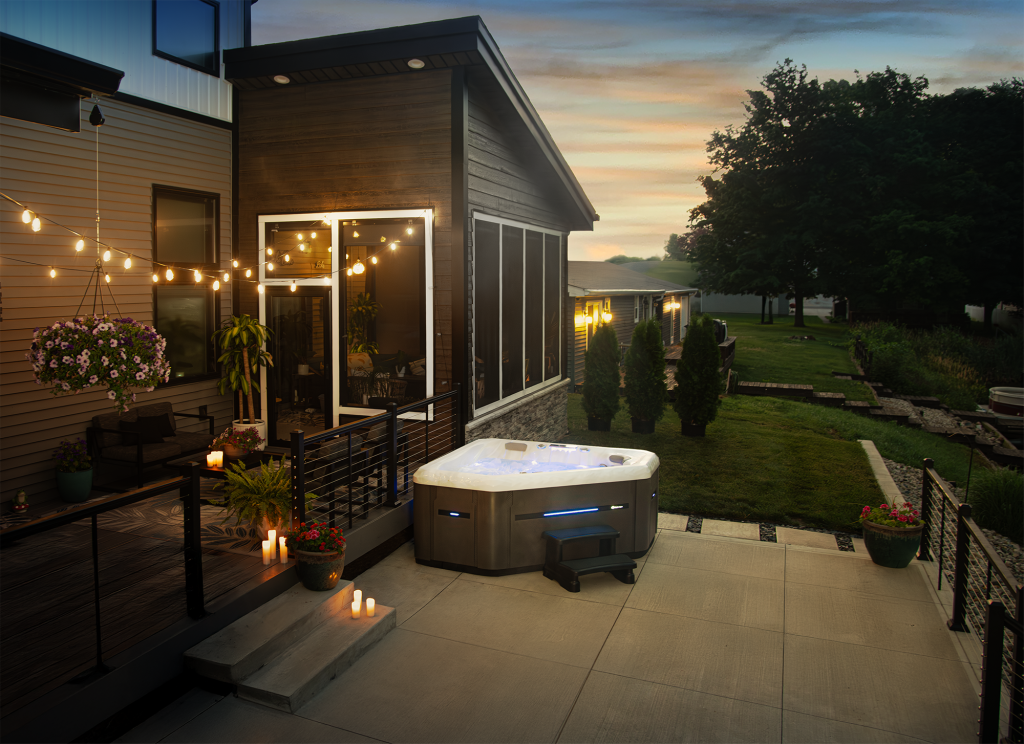
Hot tub landscaping ideas for 2026
February 10, 2026



Your backyard might not always be the trendiest space on the property. It may not even be the most used.
But in 2026, homeowners across the country are rethinking what outdoor spaces are really for. Forecasts point to a shift toward landscapes that feel calmer, more personal, and easier to live with day after day. Garden Media Group’s 2026 outlook highlights growing interest in gardens that soften stress and create moments of everyday joy. Landscape professionals echo that sentiment, noting increased demand for cozy outdoor “rooms,” wellness-focused features, and spaces that feel like natural extensions of the home rather than separate destinations.
Whether you’re refreshing a few areas this year or planning a larger project, like installing a hot tub, these 2026 landscaping ideas can help you shape a backyard built for relaxation, connection, and year-round enjoyment.
Why landscaping around your hot tub looks different in 2026
Outdoor design in 2026 is being shaped as much by practicality as by aesthetics.
According to the Association of Landscape Professionals, homeowners are prioritizing durable materials, low-maintenance planting, and projects that can be completed in thoughtful phases instead of all at once. In warmer regions, landscape designers are seeing renewed emphasis on function-first layouts, climate-adapted plants, irrigation efficiency, and shade planning.
Around a hot tub, those priorities show up in subtle but meaningful ways: walkways that stay dry in winter, planting that creates privacy without constant trimming, lighting that encourages nighttime use, and seating zones that invite people to linger.

Designing outdoor rooms instead of open yards
One of the clearest shifts for 2026 is the move away from sprawling lawns toward smaller, more intentional outdoor environments.
Landscape professionals describe rising interest in garden rooms, tucked-away nooks, and retreat-like corners layered. These areas often feature comfortable seating, fire pits or tables, and water elements. These spaces are meant to feel restorative but still flexible enough for entertaining. Southern Botanical’s experts report similar patterns regionally, with homeowners requesting covered patios, shade structures, and outdoor living areas designed for use across multiple seasons.
A hot tub fits naturally into this new way of thinking.
Rather than sitting alone in the middle of the yard, spas are being framed with decks, screens, and greenery that make them feel like part of a dedicated retreat or outdoor living space.
Natural materials and smarter systems take center stage
Material choices are becoming more intentional in 2026.
Designers are leaning toward stone, gravel, reclaimed wood, porcelain pavers, and warm-toned hardscapes—selections driven by longevity as much as appearance. At the same time, homeowners are increasingly embracing technology that quietly improves daily use, from app-controlled lighting systems to automated irrigation that reduces waste and simplifies upkeep.
Garden Media Group’s research reinforces this blend of innovation and intention, pointing to consumers who want their landscapes to reflect personal values like sustainability, wellness, and calm.
When landscaping around a hot tub, this looks like natural stone borders that provide easy drainage, layered lighting that creates atmosphere instead of glare, and incorporating native species rather than varieties that require a lot of care.
Planning your spa area with 2026 priorities in mind
Before choosing plants or finishes, the most successful hot tub landscapes begin with observation.
Watch how sunlight moves across the yard through the day. Notice where wind tends to cut through in winter. Pay attention to neighboring sightlines and where privacy would feel most welcome. Think about how you’ll walk to the spa on a cold night and where towels, drinks, or robes might naturally land when people stay longer than expected.
Designers increasingly encourage homeowners to invest in infrastructure first. Think drainage, irrigation, soil health, and structural platforms. Then, homeowners can layer in decorative elements over time. That phased approach allows the backyard to evolve without losing cohesion, especially when the hot tub is intended to be a long-term centerpiece rather than a seasonal accessory.
Decks, patios, and platforms that anchor the space
The surface beneath your hot tub quietly defines how the entire area feels.
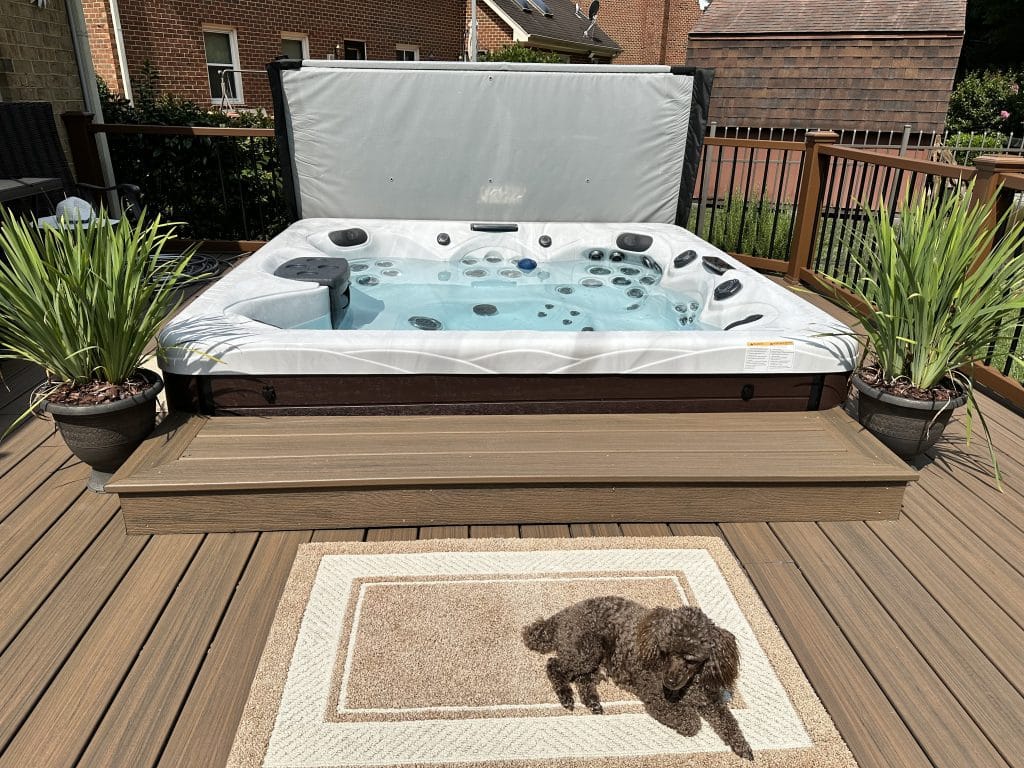
Sunken decks can make the spa feel integrated into the landscape, while multi-level patios allow homeowners to create separate zones for soaking, seating, and gathering around a fire feature. Concrete pads framed by wood or stone remain popular for their clean lines and durability, especially when paired with thoughtful landscaping that softens the edges.
When a spa is installed on a deck, structural engineering matters. Many homeowners choose a reinforced pad with surrounding decking, blending safety and longevity with design flexibility.
Privacy that feels layered, not boxed in
Privacy remains one of the most requested upgrades around hot tubs in 2026. However, that doesn’t mean towering fences on every side.
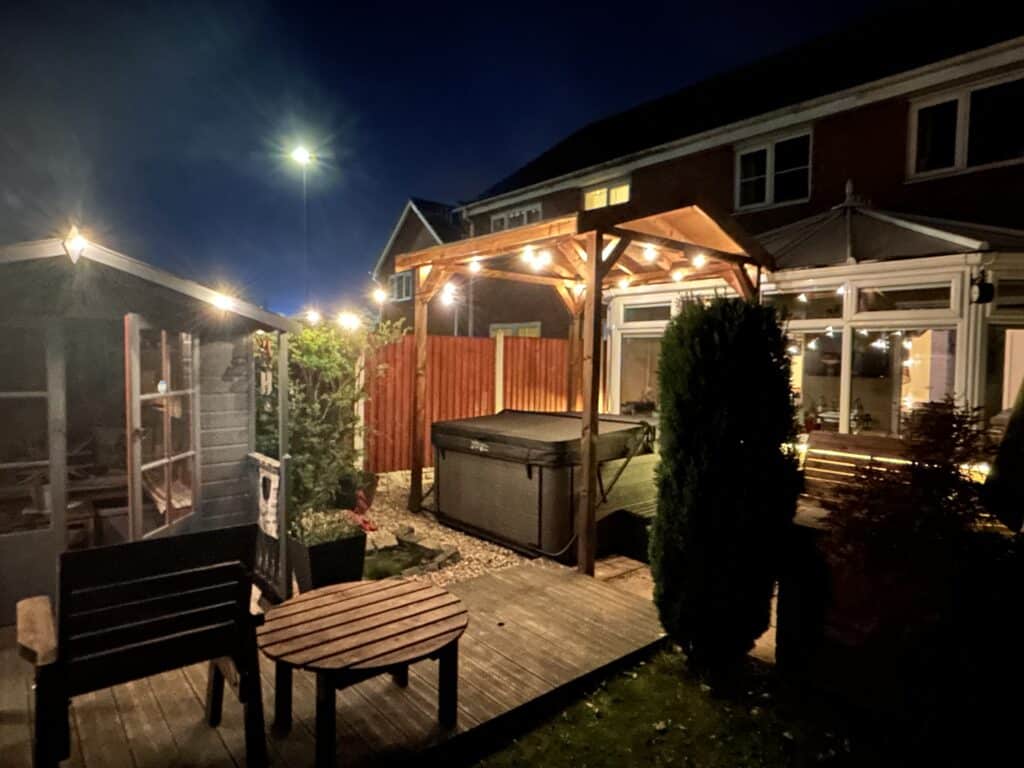
Layered solutions tend to feel more natural and refined. Evergreen hedges provide year-round screening. Ornamental grasses add movement and softness. Slatted wood panels or lattice walls define boundaries without blocking light, especially when climbing plants are allowed to weave upward. Pergolas, fitted with shade panels or drapery, strike a balance between openness and enclosure.
When done well, these elements don’t hide the hot tub. They frame it.
Low-maintenance plants for hot tub landscapes
Landscaping near a hot tub will benefit from a thoughtful, restrained approach.
Evergreen shrubs keep the space grounded through winter months. Ferns thrive in shaded corners. Ornamental grasses soften hard edges and respond beautifully to evening breezes. Containers allow for seasonal color without committing to major redesigns.
Native and climate-adapted plants are especially popular in 2026, reflecting broader industry emphasis on sustainability and durability. These choices reduce water use, require fewer replacements, and allow homeowners to spend more time enjoying their spa and less time maintaining the yard.
Lighting that extends the day into evening
Lighting has become one of the most transformative elements in modern spa landscapes.
Rather than relying on a single bright source, 2026 designs favor layers: subtle lights on patio or deck steps that guide feet to the water; pathway fixtures tracing routes through the yard; and soft uplighting that highlights trees, screens, or pergola beams. Smart controls make it easy to adjust brightness and mood with a tap on a phone.
The result feels intentional—less like a spotlight and more like an invitation.
Designing for an all-season backyard
Hot tubs are not a single-season luxury. They are designed to be used year-round, whether there is snow on the ground or the trees feature vibrant green leaves. Choosing the right landscaping details can make soaking in a hot tub enjoyable no matter the weather.
Wind-blocking screens, partial enclosures, and covered walkways help extend use deep into colder months. Nearby benches or side tables provide landing spots for towels and robes. Hooks, shelves, and discreet storage keep essentials close without cluttering the view.
These details may seem small, but together they turn winter soaking into a habit rather than an occasional event.
Where MasterSpas owners fit into this shift
Because MasterSpas hot tubs are built for year-round enjoyment, these 2026 landscaping trends align naturally with how owners use their spaces.
Many homeowners design around insulated construction that supports winter soaking, cabinet finishes that complement stone and wood surroundings, and integrated lighting that pairs easily with outdoor environments. Local dealers often help guide placement decisions and long-term planning, ensuring the spa and the yard evolve together instead of separately.
When landscaping and spa design work in tandem, the backyard starts to feel cohesive rather than assembled in stages.
Turning 2026 ideas into a real-world plan
Trends are only valuable when they translate into something you can actually build—and live with.
Start by defining the spa zone
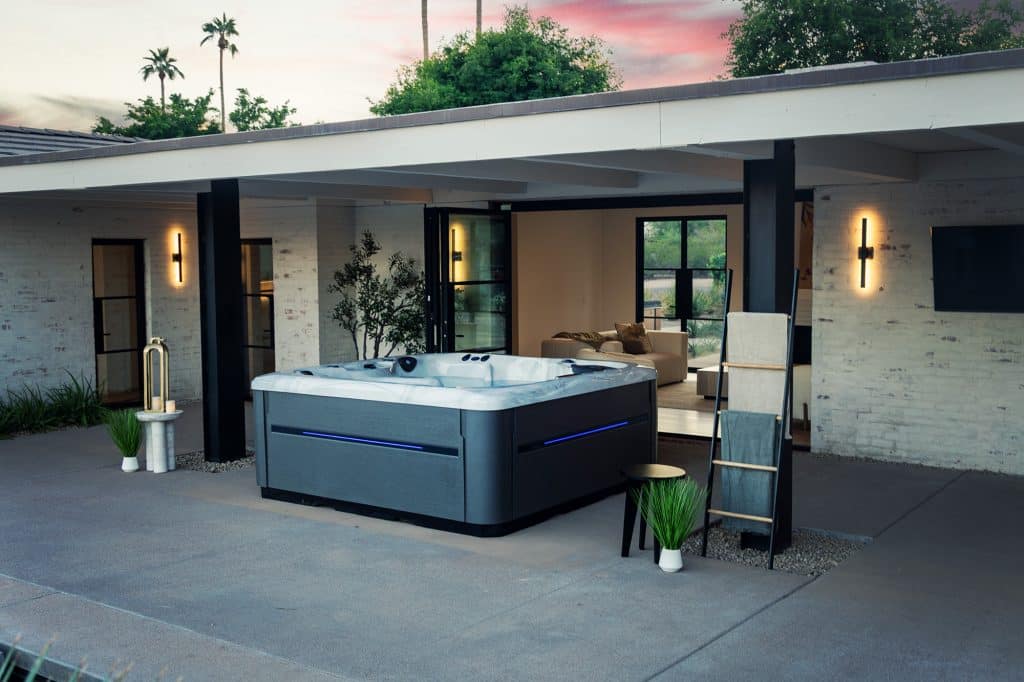
Before choosing plants or finishes, measure the hot tub footprint and add at least three feet of clearance on all accessible sides. That extra space matters for service access, cover removal, and comfortable movement around the spa.
Then map the approach. How will you walk to the hot tub in winter? Where will people step out? If the route crosses lawn or mulch, consider pavers, decking, or gravel to prevent worn paths and muddy edges.
Study how your yard behaves
Spend a few days observing your backyard before committing to materials.
Where does late-afternoon sun hit hardest?
Which direction does wind funnel from in colder months?
Where do neighboring sightlines feel exposed?
In 2026, designers are treating shade and wind control as infrastructure—not decoration. Strategic pergolas, privacy panels, or deciduous trees can dramatically improve comfort and long-term usability.
Treat drainage as a design feature
Water will splash. Rain will pool. Soil will shift.
Slight grading away from the spa, permeable hardscaping, and defined borders prevent erosion and standing water. Landscape professionals consistently point to drainage and irrigation as foundational upgrades that determine long-term success.
Build in layers, not all at once
Many homeowners in 2026 are phasing projects thoughtfully, investing in durable materials and core structures first.
Start with:
- Pad or deck foundation
- Walkways
- Privacy structure
- Electrical and lighting infrastructure
Then layer in evergreen structure planting. Seasonal color, decorative containers, and accent details can follow.
This approach keeps the design cohesive while allowing flexibility in timing and budget.